(Missed part 9? Read it here. Or start from the beginning.)
The Purpose of Marriage
After attacking the straw man that is her conception of how complementarians view marriage, Rachel Green Miller goes on write about what she believes the Bible teaches about marriage. Much of this is good, but it’s unbalanced and, in places, confusing.
She says that “some press this analogy [of Christ and the church, in Ephesians 5], saying that the purpose of marriage is to act out a parable of Christ and the church.” (p. 170) Just a few paragraphs later, she says, “To help us understand that mystery, the Bible uses the analogy of marriage.” (p. 170) It seems, then, that the takeaway is that God created marriage, God used marriage as an analogy for His relationship with His Church, but His workings were so scattered that He wasn’t purposeful in them.
I would agree with the idea that representing Christ and the Church is not the only purpose of marriage. I believe the Bible presents us with several. One of these is companionship, as made clear at creation, and referenced in Malachi 2:14. Miller seems to believe both that complementarians deny this purpose, and that it is the single purpose of marriage on which we should focus. It is, at least, the only purpose she argues for throughout chapter 11. Miller’s emphasis makes marriage primarily about us and our own desires, rather than about glorifying God.
Marriage & Singleness
The author also takes issue with the statement that “God gave us marriage not to make us happy but to make us holy,” (p. 175), arguing that when we make marriage about sanctification, we “tell singles that they’re missing out.” (p. 176) I would argue that God gives us everything He gives us more to make us holy than to make us happy, but, regardless, this is playing on people’s emotions while overlooking the obvious fact that if singles aren’t married (which, obviously, they are not), then we can’t say marriage offers anything without acknowledging by default that singles don’t have that thing.

I love my single friends, and we need to work at having a well-developed theology around the topic of singlehood, too, but think about it. Miller is saying the purpose of marriage is companionship. Would she say that the same kind of companionship we find in marriage can be found outside of marriage? If not, then is she not saying that, in her words, “singles are missing out”?
And if so, and if this companionship is the whole purpose of marriage, then what’s the point? There has to be something found in marriage which is not found outside of marriage, or there is no purpose to marriage at all.
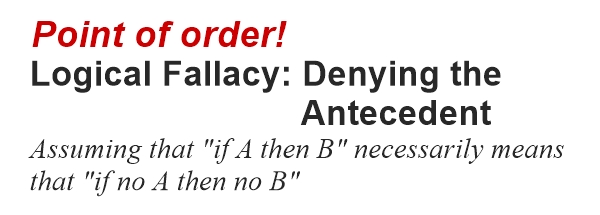
(Miller’s use of the quote from Thomas is fallacious in the first place. Saying that marriage is given to sanctify us is not equivalent to saying that only marriage sanctifies us.)
The rest of chapter 11 talks about unity, interdependence, and service, and this would be good if she didn’t seem to think she was setting herself up against the complementarians in calling for the application of these principles (as indicated in the previous post).
Application, and On Divorce
One additional chapter discusses marriage, and tackles divorce. The initial portion points out that not all marriages will look alike. I agree with this, and didn’t find any major issues with this section.
The rest of the chapter discusses divorce. Divorce is a complex issue on which even many traditionalists disagree, so I won’t dive into that here. (It is worthy of discussion, but it’s mostly a sidebar here, and I think it needs further discussion than we can give it here or than it was given in the book.) There are a couple of logical problems here, including an assumption about the source of the “permanence” and “adultery-desertion” views (she once again assumes proponents didn’t use exegesis to arrive at their positions) and a faulty analogy (in an outside quote). But, overall, these are relatively insignificant to the overall chapter.

Leave a Reply