This is a sponsored post. However, as always, all thoughts and opinions expressed here are entirely my own.
I just recently (as in within about the last six weeks) took my two oldest to the orthodontist. I’d been planning to just take Ariel (who’s almost 12), but was surprised to learn, when I looked into setting up her appointment, that an orthodontist visit is recommended by age 7! This is so they can head off any major issues.
Lucky for us, my kids are late bloomers when it comes to teeth, because they do both have some crazy issues (because just the standard, general crookedness). We’re also blessed to have a very progressive dentist who offers pretty much all of the currently-available options – including Invisalign.
What’s Invisalign?
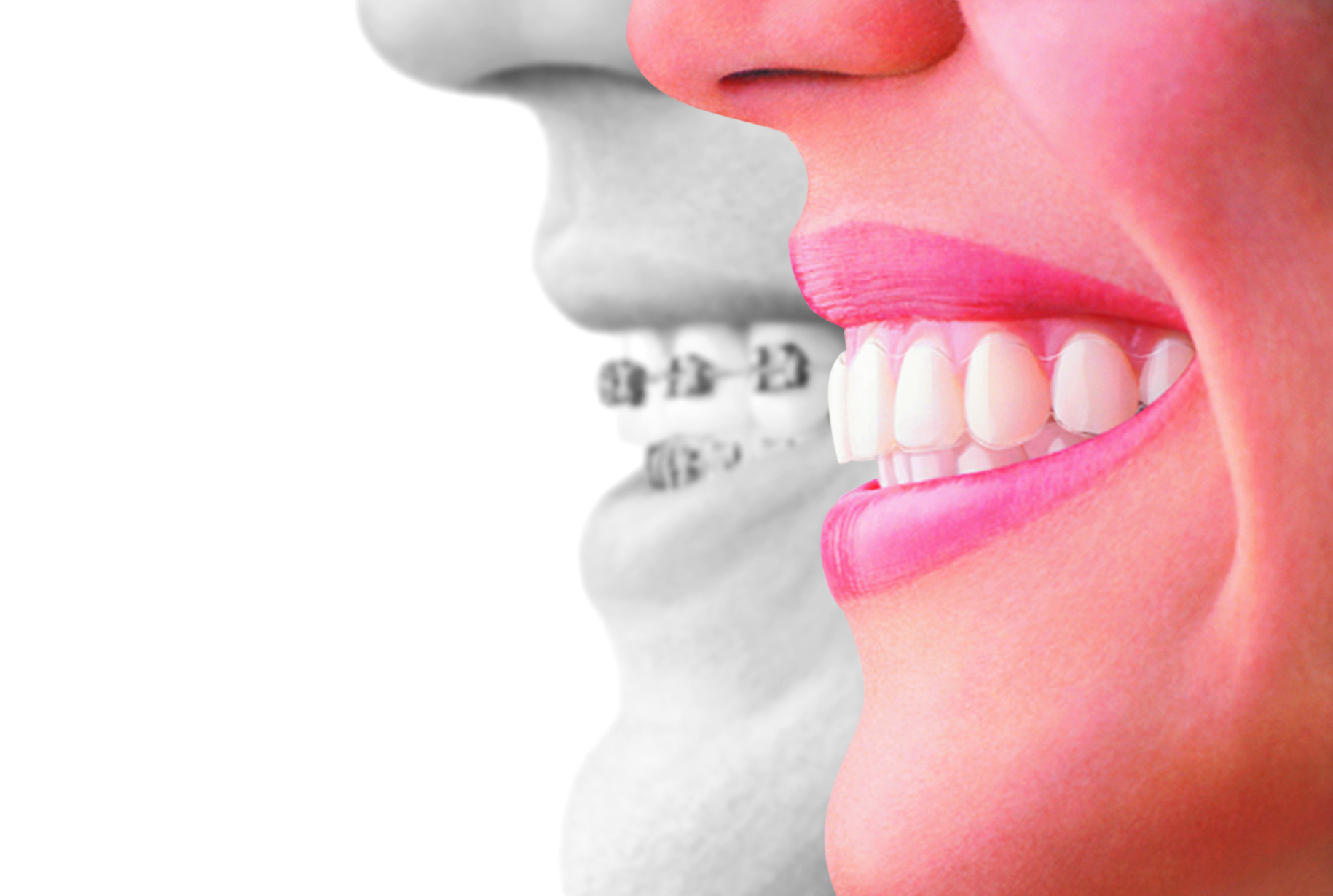
Now, Invisalign is relatively new (as in, it wasn’t around when most of us were growing up), so there seems to still be a bit of confusion around this option for most people. Invisalign is a teeth straightening alternative to braces. The system consists of a series of aligners that are gradually different from one another, progressively nudging the teeth into better alignment. These aligners are (very!) roughly similar to a tooth whitening tray or something – that is, they encase the teeth, as opposed to attaching to the teeth as braces do. This offers some unique benefits.
- They’re clear, and designed to more-or-less “hug” the teeth, so they’re not as visible as traditional braces.
- Having not worn them myself I can’t comment from personal experience but I would guess their design is easier to sing around than the bulk of traditional braces. (This could be a really big deal for my girls, who both sing in choir.)
- Because they’re not permanently attached to the teeth, wearers can still brush and floss! Just pop them out, brush/floss, then pop them back in.
- It’s okay to eat normal foods. There are no worries about tortilla chips popping off wires, for instance.
- I don’t really think my girls would care about the appearance of braces, but these have got to be more comfortable than metal brackets that rub the inside of your mouth!
But What About…?
Now, chances are you have some concerns, especially if you’re looking at these as a possibility for your child rather than yourself. But chances are they’re easily alleviated, too! Invisalign even has a whole special line, Invisalign Teen, made with pre-teens and teens in mind.
You might be concerned that Invisalign will be a lot more expensive than braces. They probably won’t be. Typically, a full round of Invisalign carries about the same cost as a comparable round of traditional braces, and is covered by dental insurance and HSA-permitted just like braces.
You might be concerned that teeth straightening will take longer. It probably won’t. Treatment time is typically about the same as with traditional braces (and without any worry about emergency visits due to broken wires or loose brackets!)
You might be concerned that your child won’t wear the aligners like he should. You know your child better than anyone, of course, but you might be surprised to learn that teens in general are more compliant in wearing their aligners than adults generally are. And small blue dots (“compliance indicators”) gradually fade as the aligners are worn, so you and the orthodontist will know if your child is wearing the aligners as he should be.
You might be concerned that your child will lose them all the time, and that will get expensive. Again, you know your child better than anyone else, but your worries are probably worse than the reality. Invisalign Teen includes up to six free replacement aligners, but teens in general don’t lose them often.
So why haven’t these aligners completely replaced traditional braces? Well, I suspect in part it’s personal preference and the natural human resistance to change. And it part it’s because it depends on what you need to have done. My daughters both have some wonky stuff going on with their teeth.
One has a baby tooth that hasn’t come out, because the permanent tooth is coming in at such a crazy angle. Our orthodontist is planning to put braces on/around that one tooth and essentially mimic what the permanent tooth should have done, putting pressure on the baby tooth to bring it out. The thinking is that the permanent tooth should then attempt to follow the “path of least resistance” and redirect somewhat so it’s at least in the right general space.
And both girls need some teeth pulled back, along with some special hardware (I forget what it’s called) to make some more space in their mouths. This is a “phase one” treatment for them, and I think they will need traditional braces for this due to the nature of the work. (For instance, that some apply only to parts of their mouths.)
But then they’ll need to move on to “phase two,” which is the actual straightening of their whole mouthfuls (mouthsful?) of teeth, and Invisalign should work beautifully for this stage. I’m glad we have options!
Want to Know More?
Like Invisalign on Facebook or follow them on Twitter. And check out their website for lots more information – like a locator for orthodontists who work with Invisalign. (Our orthodontist shows up as an “Elite Preferred Provider” and an “Invisalign Teen Provider.” Yay!)
Want to Win?
If you or your child could use Invisalign treatment, you’ll want to enter via the Rafflecopter widget below. They’re giving away a full Invisalign treatment!
(Invisalign has provided a handy infographic to walk you through your teeth-straightening journey, too, but it’s awfully long for this post, so I’ll just direct you to view it on Pinterest.)

Leave a Reply