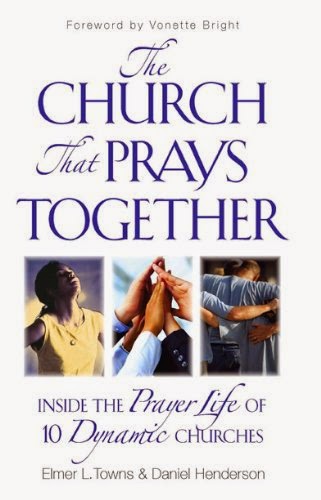
I wasn’t sure what to expect when I first heard about The Church that Prays Together: Inside the Prayer Life of 10 Dynamic Churches. I think I expected something largely biographical, but not very practical. To some degree, that’s what I found, but it was much more practical than I had anticipated.
The introduction is followed by ten chapters. Each of the first nine chapters profiles one particular church, highlighting its unique approach to prayer. We’re given some history of how the church arrived at that place, and then a description of how they pray. In some instances, jobs were shaky. In others, God drew individuals into these specific churches as He was starting something new, or the membership “just” felt a burden for the lost around them. In some instances, it wasn’t anything this outstanding, but just a simple day-to-day dependence on the Lord.
The churches reflect a variety of cultures, sizes, and geographical regions within the United States. Their approaches to prayer are varied, as well. The final chapter offers up a smorgasbord of prayer styles, ranging from solemn assemblies to conversational/”popcorn” prayer to using photographs for intercession.
All in all, a wide variety of prayer styles or methods are featured. Some are fairly mundane; others are very creative. Probably not all will be useful or applicable to everybody, but most readers should find at least one or two ideas to “shake things up” a bit.
I really appreciated the overall focus of the book. Historically, every great revival has been preceded by great dedication to prayer, because we cannot do anything on our own; we need the empowering of the Holy Spirit. The authors have done a good job here keeping this focus, even while spelling out the nitty-gritty of what people are doing to pray. There were some places, though, where I wish they had dug a little deeper into the methodology. In a couple of the individual church chapters, references were made to prayer styles, methods, or skills with which those churches were obviously very familiar, but these styles were not clearly defined or described. I wish they had made these things clearer.
It also might have been helpful to have an appendix or something with a list of resources. I finished the book inspired to pray more, but feeling like many of the churches and individuals highlighted have knowledge in this area that I’m lacking, and not knowing where to go to find the teaching they’ve received.
I would recommend this book — especially for church leaders — but I think the authors could have done more with it.
Disclosure of Material Connection: I received this book free from NavPress Publishers as part of their Blogger Review Program. I was not required to write a positive review. The opinions I have expressed are my own. I am disclosing this in accordance with the Federal Trade Commission’s 16 CFR, Part 255: “Guides Concerning the Use of Endorsements and Testimonials in Advertising.”

Leave a Reply