One of the swaps I recently participated in at Craftster was a Fat Quarter swap. In order to allow for some pattern mixing, the “rules ” were to craft using two fat quarters. Notions and such were permitted, of course, but no additional fabric was to be used. The variety of items made was amazing! Even more amazing, though, was seeing just how much can be squeezed out of such small pieces of fabric. By way of illustration, I’m going to show you what I made with my fat quarters (including links to the tutorials I used, where appropriate). Keep in mind that everything here was made from a total of two fat quarters of fabric!
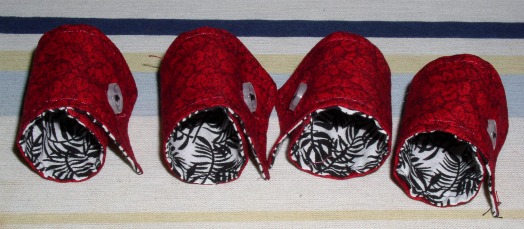
Stocking Ornament:

This was kind of a pain to finish, but I love the way it turned out! I did not use a tutorial for this one. I found an image online of a stocking in a shape I liked, and used that to created an outline, with a little extra sticking up at the top to allow for the folded cuff. I then cut two of these from each fabric, and sewed them together along the sides and bottoms to create a “bag ” and a “lining,” leaving an opening in the red piece along the side where the cuff would fold over and cover it up. Then, with right sides together, I sewed the bag and lining together along the top edge and turned them through the opening I’d left. (Basically, I did this just like I would make any lined bag, except I left the hole for turning at the top of the side of the outside, rather than in the lining.) I then hand-sewed the opening closed and hand-stitched the hanging loop on.
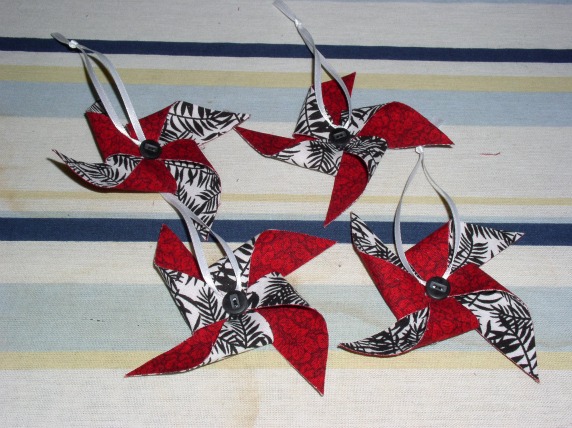
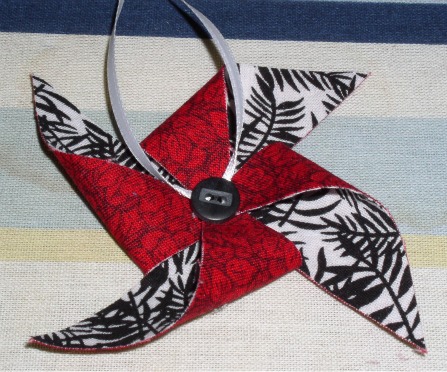
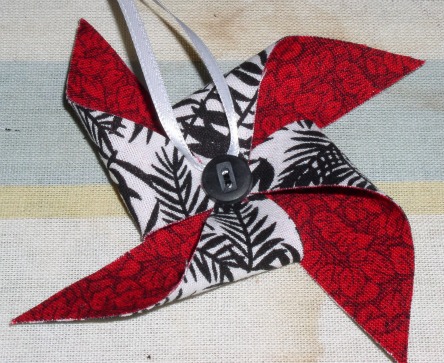
(Set of 4) Pinwheel Ornaments:
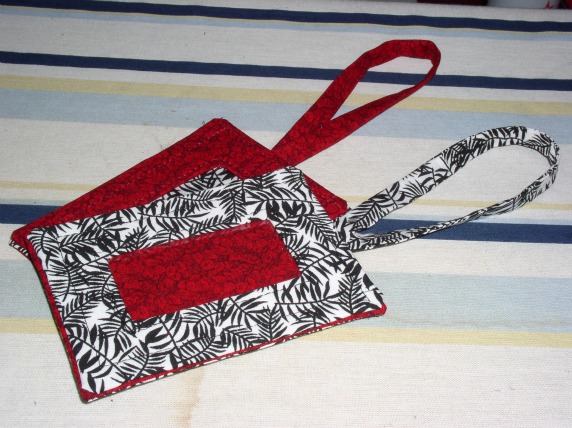
I did make a couple small tweaks to this when I made my tags. After gluing the clear vinyl in place, I topstitched around the entire window. (The tutorial does not include this step; it apparently relies entirely on the glue to hold the vinyl. I just used the glue as a sort of “basting” to hold it long enough for me to sew it.) Also, I used some of the tag fabric to make straps, rather than using ribbon. When you topstitch these, be sure to set your stitch length a tad longer than usual, as the interfacing is really thick!
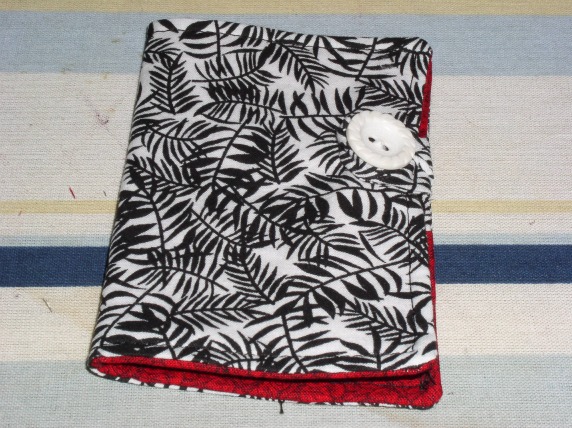
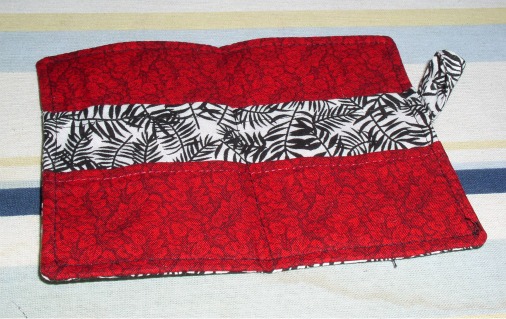
Bookmark:
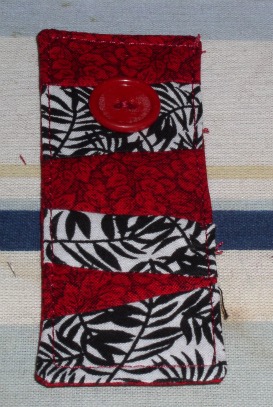
I did find the inspiration for this from a picture on a blog, but I’m not sure where I found it. (If you know where it is, feel free to post it in the comments, and I can update this post.) There was not a tutorial, though, so I just tried to imitate what I saw in the picture. The button is more than decorative; it helps keep the bookmark from slipping down inside the book.
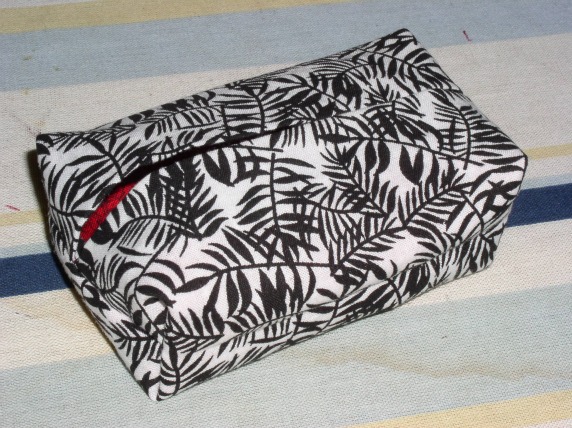
I love how these particular instructions handle the lining! I did adapt this a bit, though. First I converted the measurements to inches. (It’s a Canadian tutorial, I think, and the measurements are in centimeters.) Also, I boxed the corners; I like my tissue covers better that way.
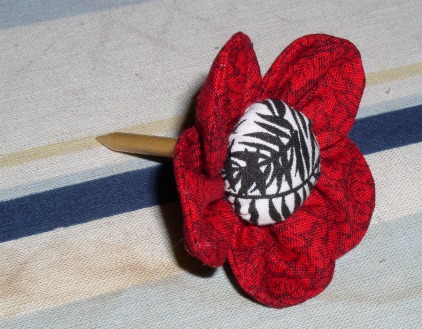
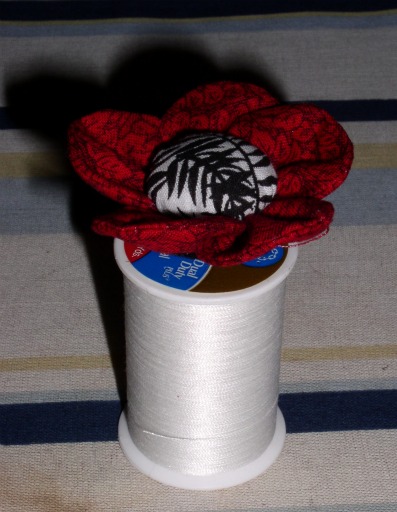
I think this pincushion is the coolest idea ever! It is designed to sit atop a thread spool, as shown in the second picture.
After making all of those items, I had a small handful of tiny scraps left. I used them to make the following:
“Ribbon” Roses:
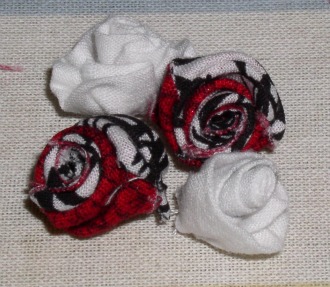
I was learning on these, so a couple of them didn’t really come out like I’d hoped. The white roses are made entirely of selvedge pieces!
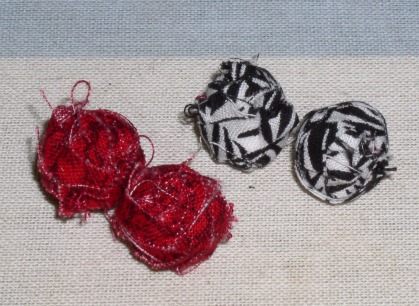
I wasn’t overly happy with these, either. The ones in the tutorial looked way better than mine! These might make some cool earrings, though.
Inchies:
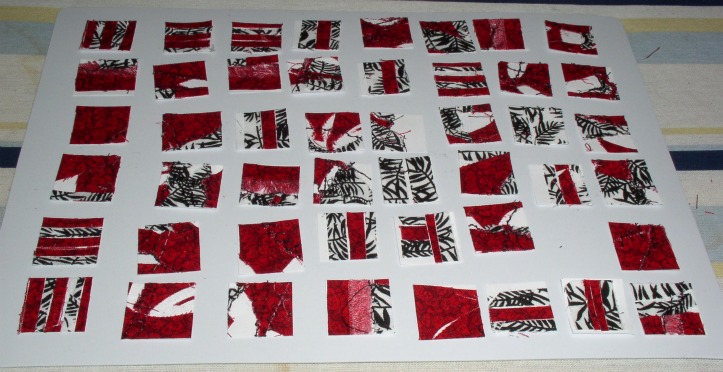
For these inchies (and the ATC’s below), I ironed the scraps to fusible web, then ironed that to a piece of cardstock for support. Then I just cut them to the appropriate sizes. I just put the inchies in a baggie and sent them to my swap partner to use in her own projects, but if I’d done something with them myself I would probably have used them on cards. These prints together made some really neat, graphic-looking inchies, I think.
ATC’s (Artist Trading Cards):
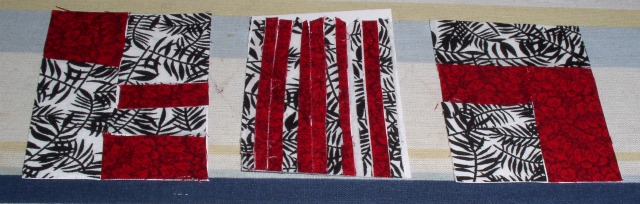
These are a little less useful, I think, but they made use of the last bit of scrap. 🙂

Leave a Reply