Why Acupressure?
If you’re a regular reader, you know by now that I believe there’s a good deal of merit to a lot of traditional and “alternative” medicine. Much of it is discounted by the modern (Western) medical system (and by many Christians) because we don’t understand how it works. But not understanding how it works does not necessarily mean it doesn’t work.
There are some underlying concepts that are the same from culture to culture in their traditional approaches to healing and I don’t believe that all of these separate cultures individually arrived at the same conclusions for no reason! Acupuncture has actually demonstrated to be effective, by modern testing methods. Acupressure is based on exactly the same principles, but is more accessible for the average consumer, because it doesn’t involve needles.
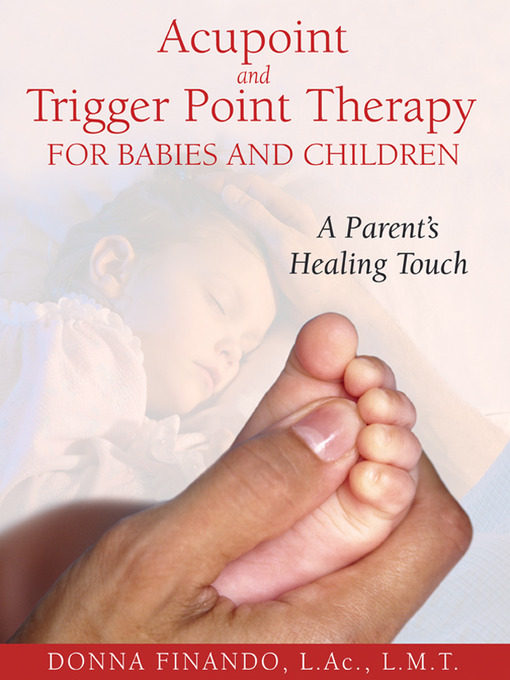
Acupoint and Trigger Point Therapy for Babies and Children
The publisher sent me a copy of Acupoint and Trigger Point Therapy for Babies and Children: A Parent’s Healing Touch, which is written specifically for parents to use with their children. It’s intended for the average parent, and is easy to understand and apply.
It wasn’t exactly what I was expecting. For the most part, rather than suggesting certain points for a parent to press on with a finger, it’s certain sections of the meridians for parents to stroke. Like a cross between acupressure and massage. (Meridians are the electrical pathways in the body relied upon by most traditional healing systems. Modern science is just starting to really learn about these, as we learn new methods for measuring them.)
The first section of the book describes “Meridian Theory.” We aren’t sure how ancient peoples knew where the meridians were located or how they worked, but as we learn to measure the energy of the body, we continually demonstrate that they were right! This section describes the meridians and what is “connected” to what. (One key facet of meridian theory is that you can often treat a particular part by addressing another part along the same meridian, because it clears “clogs” so energy can flow freely through the body again.) It isn’t necessary to read this section to employ the remainder of the book. However, the section is written in a very accessible manner.
The bulk of the book is comprised of the treatments. Each illness or symptom is given its own section. For each one, the author first answers “what is it?” and “what causes it?” and then moves on to “how can you help?” A variety of ways to help are suggested – dietary changes, ways to make him more comfortable, etc. If there are signs to watch for that indicate the need for a doctor, these are pointed out, as well. Then the treatment section begins.
Instructions for treatment are provided step by (numbered) step. Notes are included in a contrasting color after many of the steps, explaining why you’re treating the exact area you’re treating. Facing pages include diagrams of a child’s body with the sections you’ll be treating highlighted in red. The skeleton is included in these drawings so you have good reference points.
Observations
I found it interesting that many of the treatment areas are intuitive. (Maybe this is how the ancients determined where certain pathways are located?) For instance, there is a calming section of a pathway that traces the same location and shape that we use when soothingly stroking our little ones by “tucking” their hair behind their ears.
It isn’t encyclopedic, but it covers all of the most common childhood illnesses. Because it doesn’t rely on acupoint therapy alone, this would make a good general-purpose health book for a new parent.

Leave a Reply