
A few weeks ago, I promised a post about why it is a big deal not eating grains, and why it bugs me to hear people say that a) it isn’t and b) that humans aren’t designed to eat grains in the first place.
We Are Designed to Eat Grains
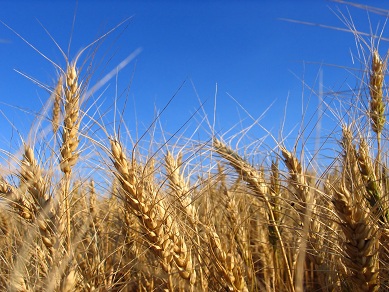 Let me tackle the “b)” first. The claim that we aren’t designed to eat grains is rooted in evolutionary assumption. The thinking is that we “evolved” from hunter-gatherers and only later began growing grains for consumption.
Biblically, this just doesn’t hold up. In Genesis 4, we’re told that Cain was a “tiller of the ground” and that he brought an offering “of the fruit of the ground.” Now, we don’t know for certain what type of plants Cain was growing, but most people who grow plants on a large scale grow grain of some variety.
In Genesis 18, Abraham and Sarah provide bread to those who come to visit them.
Certainly there was widespread grain consumption at least by the end of Genesis, as the second half of Joseph’s life story is all about storing up grain! (Prior to this, we might also note that he was imprisoned with Pharaoh’s chief baker.)
The obvious conclusion is that man has been eating grain from at least almost-the-beginning, if not from the very first.
We Ought to Eat Grains
So it’s been around for a while – what’s the big deal? Why do we need to eat grains? What makes them necessary?
Well, first of all, we need to make a distinction between necessary and important. I don’t know that I believe grains are necessary; I do believe they’re important.
Why? First of all, I believe God does.
The Creator of our bodies seems to place a pretty high importance on grain. Grain/bread was an integral part of the Old Testament sacrifices and feasts. That is, there were certain times when particular grains or grain products were required to be eaten.
Jesus is described as the bread of life. (It’s kind of hard to grasp the significance of that if you believe grains to be inherently harmful or even just irrelevant.)
Even the manna that He provided as the Israelites’ sustenance in the wilderness was very like a grain. (They ground it and made bread from it.)
Grain is Nutritious Part of a Balanced Diet
Second, I believe that grain is designed to be good for us! Yes, I understand (firsthand!) that certain grains can be detrimental to some people. It is my ardent belief that this is abnormal. Being harmed, rather than helped, by grains should be an aberration, not a common occurrence.

I’m told that, of 44 major nutrients, wheat contains 40. (I’m not sure specifically what 44 nutrients this person had in mind, but it is accurate that wheat contains almost all of the necessary vitamins and minerals.) Incidentally, the few that are lacking are found in butter, so buttered bread — nutritionally speaking — constitutes a complete meal.
Of course different grains have different nutrient profiles, but wheat and barley seem to be the best balanced. (Keep in mind I’m talking about true grains here, so pseudo-grains like amaranth are excluded.) Grains also include a good deal of fiber — both soluble and insoluble — and plenty of complex carbohydrates to add bulk to your meals without unnecessary sugar.
The calories can be a real issue! Breads provide a good “base” for other foods, and when this is lacking, eating can get tricky. Sure, there are other foods with fiber — but they don’t have the same fill-you-up character as bread. I can eat chicken salad wrapped up in a lettuce leaf instead of on a sandwich, but then how do I make up the calories (without eating a lot of junk food in addition)? Veggies are healthful, but they’re not very filling. The two slices of homemade bread I would have eaten that chicken salad on before would be about 200-250 calories. (Because it’s denser, homemade bread is higher in calories-per-slice.) That lettuce leaf? Five.
How about peanut butter? You can’t put peanut butter and jelly on a carrot. (Well, you could, but…eww.) Even if you did, how many carrots does it take to equal the bread from that sandwich? About ten medium carrots. Can you eat ten carrots at a sitting? I can’t — and certainly not if I have to eat other foods at the same meal.
So, while it may not be strictly necessary to eat grains to get a balanced diet, it is certainly much, much harder to eat a balanced diet without them. In my book, that means it is a big deal to cut them out. Impossible? No. The end of the world? No. But let’s just be honest and admit that it’s difficult.

Originally posted 12 Jul 2011. Updated 14 Jan 2021.

I find the bit about the butter interesting – I’m going to copy and paste so I can send it to Michael. He’ll be very pleased to hear that bread-and-butter is a nutritionally complete meal, since it’s one of his absolute favorite things to eat.
Thank you for that details article. In passing someone who spouts off some “talking point” it is hard to get into all this, but I could hit the highlights. 🙂 And there are some people that you could stand before God and they could be told this and still would not “hear” it, so that is a waste of time anyway. The current problem I have with a person I try to talk to about a variety of topics does not believe in God SO anytime bible or God is mentioned they say, “Well, I don’t believe in God…..” so then the conversation is void. Everything comes from God eventually so you can’t discuss any topic without it eventually getting back to the CREATOR. Yet I digress. Thank you so much for this article – very helpful. Now, there is a faint beep- that is going off about every 5 minutes, or so, and I haven’t a clue……
Teri, would it help for your non-believing person to mention that the actual EVENTS of the Bible are historically recorded — for example, the drought in Egypt that prompted Joseph to store grain, etc. is recorded by historians such as Josephus and Eusebius. So someone may not believe in the THEOLOGY of the Bible, but the HISTORY of the Bible is documented by non-Christians throughout time. Also, I have links to the nutrients stuff, etc. at the end of my article on Whole Grains at my site. I don’t think Rachel would mind me giving you the link — http://www.everydayhomemaking.com.
The direct link to the article is: http://www.everydayhomemaking.com/articles/whole_grains.html 🙂
“Mom”, This person is a professed atheist and like I said, if they were standing face-to-face with God Himself she would deny His existence. This is a case for God Himself & I continue to pray for her and try, when I can, to sneak something in that will not set her off.
Great post Rachel. Thanks!
LOVE this post! I feel very much the same way and have been contemplating posting about it myself! I am not for going “grain free”, however I do believe that added gluten has been detrimental to our diets, and therefore I stand behind (though I haven’t done it ) going “ADDED gluten free” (or even just a full “gluten free” period for a short time to help detox and “reset” the body).
We mill our own grain (can’t remember the last time I bought flour) and will continue to do so. I do not believe God created a food that He also provided in Biblical times only to reach a point where it is now “bad” for us. He doesn’t make mistakes or overlook anything.